Short v Poole Corporation (1926)
Short v Poole Corporation involved a legal challenge to the marriage bar that prevented married teachers from working in schools. The marriage bar had been re-introduced by many local authorities after the First World War with the encouragement of the … Read more
Widows’ Orphans’ and Old Age Contributory Pensions Act 1925
The Widows’, Orphans’ and Old Age Contributory Pensions Act 1925 allowed some women to reduce the impact of poverty and the vagaries of the Poor Law on their lives by promising a small amount of regular, definite income. From 4 … Read more
Report of the War Cabinet Committee on Women in Industry, 1919
In September 1918, the War Cabinet set up a committee on ‘Women in Industry’: ‘To investigate and report on the relation which should be maintained between the wages of women and men having regard to the interests of both as … Read more
Birmingham City Council v Abdulla [2016]
Birmingham City Council v Abdulla allowed women to present equal pay claims in High Court with 6-year limitation period instead of 6 months in Employment Tribunal.
Welsh Assembly Election 2003
In 2003, the National Assembly of Wales became the first legislative chamber to elect equal numbers of female and male Assembly Members.
Sex Discrimination (Election Candidates) Act 2002
The Sex Discrimination (Election Candidates) Act 2002 allowed UK parliamentary parties to select candidates based on gender in order to increase proportion of women in Parliament.
Webb v EMO Air Cargo (UK) Ltd (No 2) [1995]
Webb v EMO Air Cargo (UK) Ltd (No 2) established that dismissal on grounds of pregnancy was contrary to the Sex Discrimination Act 1975.
OP-CEDAW (2005)
The Optional Protocol to the Convention on the Elimination of all Forms of Discrimination Against Women (OP-CEDAW) gives women the ability to hold government to account for systemic gender inequality.
Sex Discrimination Act 1975
The Sex Discrimination Act 1975 made it unlawful to discriminate against either sex ‘on the ground of’ sex.
Criminal Justice Act 1972, Section 25
Section 25 of the Criminal Justice Act 1972 removed all statutory gender discrimination in the rules for jury qualification, allowing women to be jurors on the same terms as men
Dagenham Car Plant Strike (1968)
The Dagenham Car Plant Strike is widely considered to represent an important step towards the introduction of the Equal Pay Act 1970
Education Act 1944
The Education Act 1944 removed the marriage bar in teaching and gave working-class girls access to high school education.
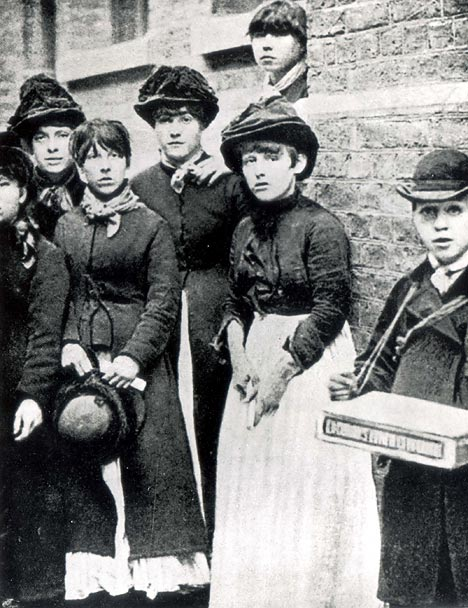
The Matchworkers’ Strike at Bryant and May (1888)
The Matchworkers’ Strike at Bryant and May in 1888 led to legislative improvements to protect women in the workplace and demonstrated that women could play a key role in gaining important rights through collective workplace bargaining.
A Vindication of the Rights of Woman (1792)
Published in 1792, Wollstonecraft’s ‘A Vindication of the Rights of Woman’ was a pioneering call for equality.
Cyfraith Hywel (the laws of Hywel Dda)
The Laws of Hywel Dda (c.950) set out the legal status of women in medieval Wales.
Gill and Another v El Vino Co Ltd [1983]
Gill and Another v El Vino Co Ltd established that women had the same right to receive service at a bar in London as men.